
What is the 1000 Series of Aluminum Coil
What is the 1000 Series of Aluminum Coil? The Complete Guide to Commercially Pure Aluminum
When discussing aluminum materials, the term "1000 series" frequently appears—but what exactly does it mean? For engineers, procurement professionals, and manufacturers, understanding this fundamental aluminum category is essential for making informed material selections. In this comprehensive guide, we'll explore everything you need to know about 1000 series aluminum coil, from its composition and properties to its diverse applications across industries.
What is the 1000 Series Aluminum?
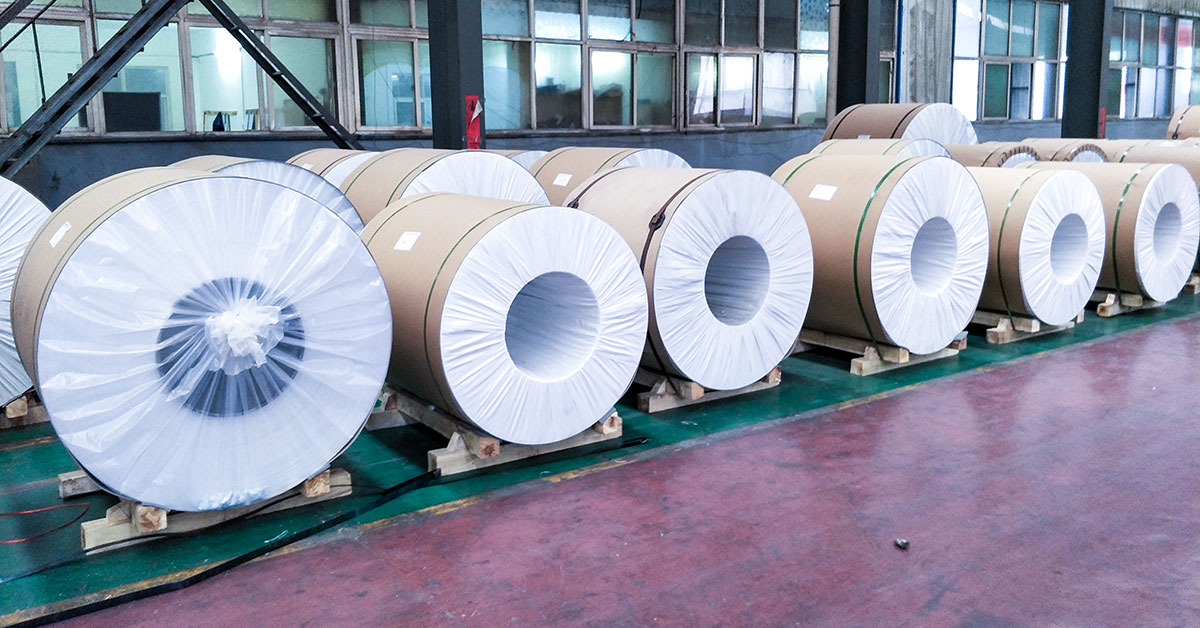
The 1000 series represents the purest form of aluminum among all alloy families. These alloys are often referred to as "commercially pure aluminum" because they contain a minimum of 99% aluminum content, with no intentional addition of other alloying elements .
In the international alloy designation system, the 1000 series is reserved for aluminum with purity levels of 99.00% or higher. The last two digits of the alloy designation indicate the minimum aluminum percentage. For example:
1050 aluminum: Contains a minimum of 99.5% aluminum
1060 aluminum: Contains a minimum of 99.6% aluminum
1070 aluminum: Contains a minimum of 99.7% aluminum
1100 aluminum: Contains a minimum of 99.0% aluminum
This purity gives the 1000 series its distinctive characteristics: excellent corrosion resistance, high thermal and electrical conductivity, and exceptional workability .
Key Properties of 1000 Series Aluminum Coil
Chemical Composition
The chemical composition of 1000 series alloys is characterized by high aluminum content with only trace amounts of other elements. Using 1070A as an example, the composition typically includes :
ElementPercentage
Aluminum (Al): 99.7 to 100%
Iron (Fe): 0 to 0.25%
Silicon (Si): 0 to 0.2%
Zinc (Zn): 0 to 0.07%
Manganese (Mn): 0 to 0.03%
Titanium (Ti): 0 to 0.03%
Copper (Cu): 0 to 0.03%
Magnesium (Mg): 0 to 0.03%
The trace amounts of iron and silicon found in 1000 series alloys are typically residual elements from the refining process, though in some cases small quantities may be added to improve strength without significantly impacting electrical properties .
Physical and Mechanical Properties
Strength Characteristics:
1000 series aluminum offers moderate strength that varies depending on the specific alloy and temper. For 1070A aluminum, the mechanical properties include :
Tensile Strength (Ultimate): 68 to 140 MPa
Tensile Strength (Yield): 17 to 120 MPa
Elongation at Break: 2.3 to 33%
Brinell Hardness: 18 to 40
Shear Strength: 44 to 81 MPa
Physical Properties:
Density: 2.7 g/cm³ (approximately one-third the weight of steel)
Melting Point: Approximately 640°C to 660°C
Thermal and Electrical Performance:
This is where 1000 series truly excels :
Thermal Conductivity: 230 W/m-K
Electrical Conductivity: 60% IACS (International Annealed Copper Standard)
Specific Heat Capacity: 900 J/kg-K
Thermal Expansion: 23 µm/m-K
For comparison, 1060 aluminum in H14 temper offers electrical conductivity of ≥59% IACS, while 1100 aluminum achieves ≥53% IACS .
Formability and Workability
One of the most valuable characteristics of 1000 series aluminum is its exceptional formability. These alloys are:
Highly ductile: Can be deeply drawn, bent, and formed without cracking
Easy to weld: Respond well to various welding techniques
Pressure workable: Suitable for extended, bent, and pressure-processed applications
Surface finish adaptable: Accepts mill finish, anodized, embossed, and coated surfaces
Common 1000 Series Aluminum Alloys
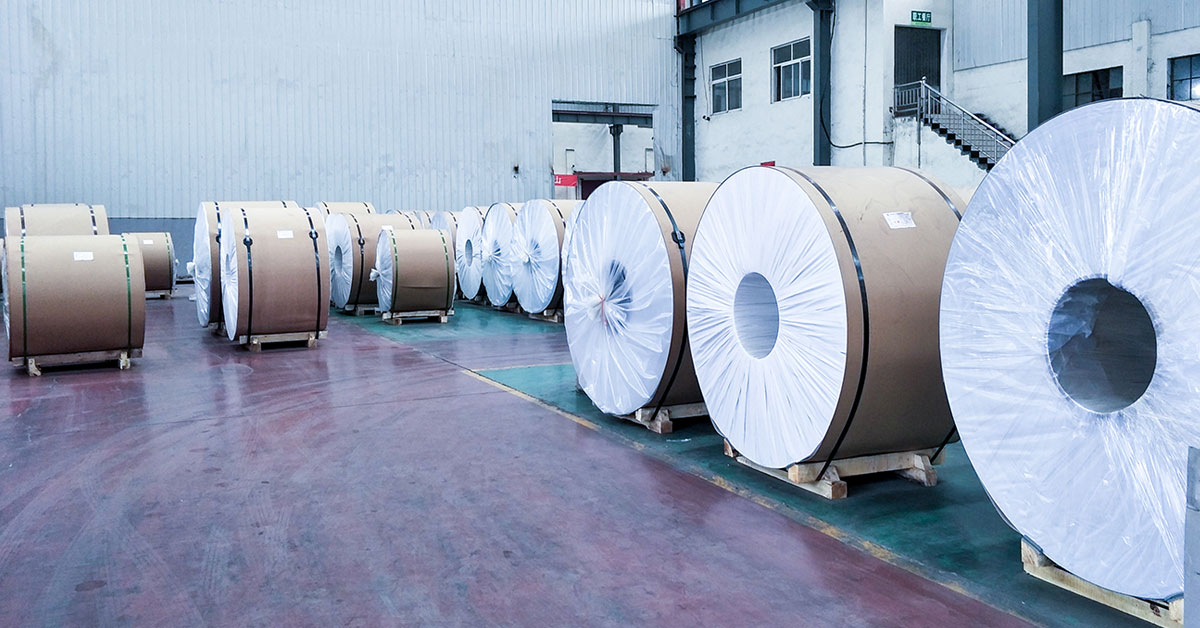
1050 Aluminum
With 99.5% minimum aluminum content, 1050 is one of the most widely used 1000 series alloys. It offers excellent formability and corrosion resistance at a competitive price point .
1060 Aluminum
Containing at least 99.6% aluminum, 1060 provides slightly higher purity than 1050, making it particularly suitable for applications requiring enhanced electrical conductivity or corrosion resistance .
1070/1070A Aluminum
With 99.7% minimum aluminum content, these alloys offer even higher purity and correspondingly improved electrical properties .
1100 Aluminum
While containing 99.0% minimum aluminum, 1100 is often included in the 1000 series discussion. It offers slightly higher strength than purer alloys while maintaining excellent formability and corrosion resistance .
1350 Aluminum
A specialized electrical conductor grade with controlled composition for optimal conductivity, often used in power transmission applications .
Advantages of 1000 Series Aluminum Coil
1. Exceptional Corrosion Resistance
The high purity of 1000 series aluminum gives it outstanding resistance to corrosion. It naturally forms a protective oxide layer when exposed to air, making it ideal for applications in challenging environments .
2. Superior Thermal and Electrical Conductivity
With electrical conductivity reaching 60% IACS, 1000 series alloys are among the most conductive aluminum materials available. This makes them the preferred choice for electrical and thermal management applications .
3. Excellent Formability
The absence of significant alloying elements means these materials can be extensively formed, bent, drawn, and shaped without cracking—a critical advantage for complex manufacturing processes .
4. Cost-Effectiveness
Due to their simple production process (no complex alloying additions), 1000 series aluminum coils are generally priced lower than other series, making them an economical choice for many applications .
5. Weldability
These alloys respond well to various welding techniques, allowing for efficient fabrication and assembly .
6. Recyclability
Like all aluminum, 1000 series is 100% recyclable without loss of properties, contributing to sustainability goals and circular economy initiatives .
Limitations of 1000 Series Aluminum Coil
1. Low Mechanical Strength
The primary limitation of 1000 series aluminum is its relatively low strength compared to other alloy series. It cannot be heat-treated for additional strength and is not suitable for structural applications requiring high load-bearing capacity .
2. Not Suitable for High-Stress Environments
Applications involving significant mechanical stress, fatigue loading, or impact resistance typically require stronger alloys from the 5000, 6000, or 7000 series .
3. Limited Wear Resistance
The soft nature of pure aluminum means it may not perform well in applications involving abrasion or repeated contact without surface treatment.
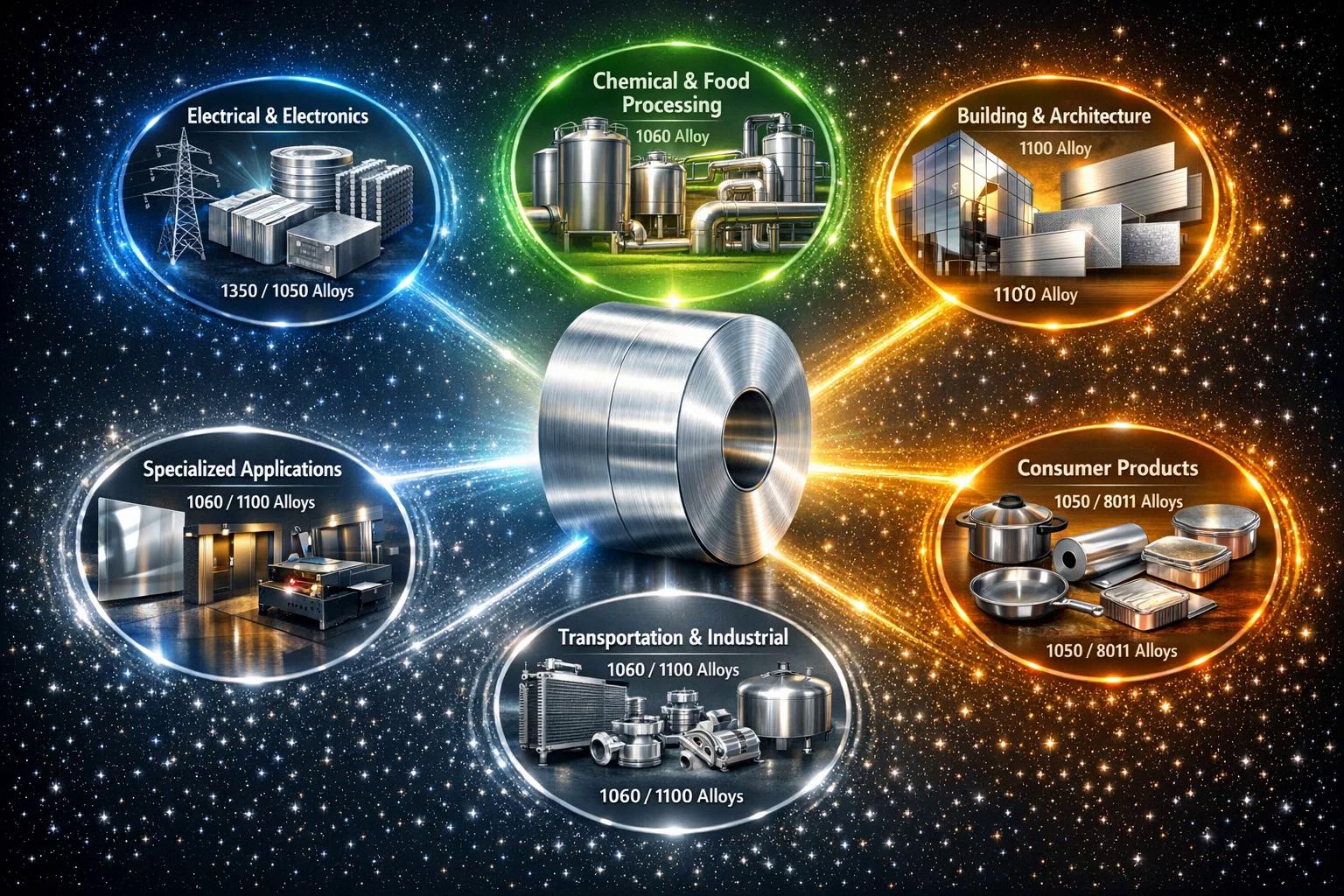
Applications of 1000 Series Aluminum Coil
The unique combination of properties makes 1000 series aluminum coil suitable for a diverse range of applications across multiple industries.
Electrical and Electronics
Power Transmission:
1350 alloy is widely used in overhead power lines, busbars, and transformer windings, where its high conductivity and light weight provide significant advantages over copper .
Electronic Components:
Heat sinks, EMI shielding, and stamped components benefit from the thermal conductivity and formability of 1050 and 1060 alloys .
Chemical and Food Processing Equipment
The excellent corrosion resistance of 1000 series aluminum makes it ideal for:
· Chemical storage tanks and vessels
· Food processing equipment
· Brewing and dairy equipment
· Pharmaceutical manufacturing components
Building and Construction
Decorative Applications:
· Signage and advertising boards
· Architectural panels and wall cladding
· Ceiling tiles and interior decoration
· Reflective surfaces and mirror finishes
Roofing and Gutters:
While 3000 series is more common for structural roofing, 1000 series finds application in decorative roofing elements and trim components .
Consumer Goods
Cookware and Kitchen Utensils:
The non-toxic nature, excellent thermal conductivity, and corrosion resistance of 1000 series aluminum make it ideal for:
· Pots and pans
· Baking trays
· Kitchen containers
· Food preparation surfaces
Packaging:
· Foil wrapping materials
· Container lids
· Food-grade packaging
Automotive and Transportation
While not used for structural components, 1000 series aluminum appears in:
· Heat exchangers and radiators
· Trim and decorative elements
· Nameplates and emblems
· Reflector housings
Industrial Equipment
· Chemical instrumentation
· Machined parts
· Welded assemblies
· Heat exchangers
· Storage tanks
Specialty Applications
Mirror-Finish Products:
Both 1060 and 1100 aluminum can be processed to achieve a mirror-like polished finish, making them highly desirable for :
· Decorative panels
· Elevator claddings
· Reflective components
· High-end architectural features
· Laser mirrors and optical equipment
Signage:
The combination of formability, corrosion resistance, and surface finish options makes 1000 series aluminum a preferred choice for:
· Traffic signs
· Advertising billboards
· Building identification plaques
· Commercial signage
Technical Specifications and Availability
Standard Specifications
1000 series aluminum coils are manufactured to meet various international standards, including:
· ASTM B209 (American standard)
· EN 485 (European standard)
· GB/T 3880 (Chinese standard)
· JIS H4000 (Japanese standard)
Available Forms
Parameter: Typical Range
Thickness:0.2 mm – 5.0 mm (custom up to 6.0 mm)
Width: 20 mm – 1800 mm
Inner Diameter: 150 mm, 305 mm, 405 mm, 508 mm
Coil Weight:500 kg – 5000 kg per coil (up to 8 tons)
Tempers: O, H12, H14, H16, H18, H22, H24, H26
Surface Finishes
· Mill finish: Standard untreated surface
· Anodized: Enhanced corrosion resistance and color options
· Embossed: Textured surface for decorative applications
· Mirror polished: High-reflectivity surface
· PVC coated: Protective film for fabrication
· Color coated: Painted finishes for architectural use
How to Select the Right 1000 Series Alloy
When choosing a 1000 series aluminum alloy for your application, consider these factors:
If You Need Recommended Alloy
Maximum electrical conductivity: 1350 or 1070
Balanced formability and cost: 1050
Slightly higher strength: 1100
Superior corrosion resistance: 1060 or 1070
Mirror-finish appearance: 1060 or 1100
Food-grade applications: 1050 or 1060
Deep drawing operations: 1050 (O temper)
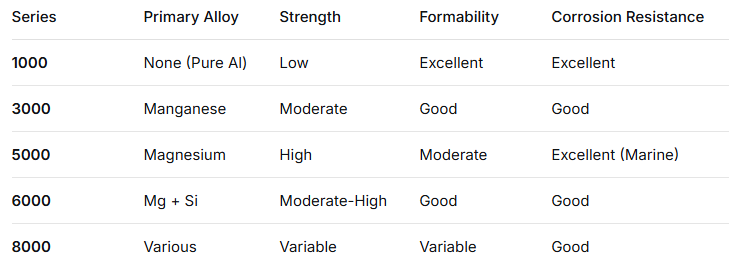
Comparison with Other Aluminum Series
To appreciate where 1000 series fits in the aluminum family, here's how it compares to other common series:
Frequently Asked Questions
Is 1000 series aluminum food-safe?
Yes, the high purity of 1000 series aluminum makes it suitable for direct food contact applications. Alloys like 1050 and 1060 are commonly used in cookware and food processing equipment .
Can 1000 series aluminum be anodized?
Absolutely. 1000 series aluminum responds well to anodizing, which enhances its natural corrosion resistance and allows for decorative colored finishes .
What's the difference between 1050 and 1060?
The primary difference is aluminum purity: 1050 contains 99.5% minimum aluminum, while 1060 contains 99.6% minimum. This slight difference can affect electrical conductivity and corrosion resistance in critical applications .
Is 1000 series aluminum weldable?
Yes, these alloys can be welded using various techniques including TIG, MIG, and resistance welding. However, proper procedures must be followed to achieve optimal results .
Can 1000 series aluminum be used outdoors?
Yes, its excellent corrosion resistance makes it suitable for outdoor applications. However, for structural outdoor applications, stronger alloys may be required .
Conclusion
The 1000 series of aluminum coil represents the foundation of the aluminum industry—pure, versatile, and reliable. While it may not offer the strength of alloyed series, its exceptional corrosion resistance, thermal and electrical conductivity, and formability make it indispensable across countless applications.
From the electrical conductors that power our cities to the cookware in our kitchens, from architectural features to pharmaceutical packaging, 1000 series aluminum coil continues to prove its value. Its cost-effectiveness, combined with its performance characteristics and complete recyclability, ensures that this "simple" material will remain a cornerstone of modern manufacturing for decades to come.
When your project requires the unique combination of purity, conductivity, and formability, 1000 series aluminum coil delivers performance you can count on.
If you need aluminum material, please tell me your purchase list, we will give you a specific quote.
We offer aluminum sample. Welcome to visit our factory.
My WhatsApp:+8615890635623
Email: anna@chinajoda.com